Hakata
Fukuoka architecture
Fukuoka is Japan's fastest-growing major city and the gateway to Kyushu island. It is famous as the birthplace of tonkotsu ramen — the rich, creamy pork bone broth that spawned countless regional variations across Japan and the world. Fukuoka's yatai (open-air food stalls) culture sets it apart from all other Japanese cities; rows of intimate stalls line the Naka River each evening, offering ramen, yakitori, and oden under a neon glow. The city also has close historical ties to China and Korea, reflected in its architecture, cuisine, and culture.
- 5Landmarks
- 757Oldest · Kushida Shrine
- 15 mTallest · Fukuoka Castle
- 2Architects
Map and Look Around
Tap a numbered pin to see that landmark from the street with Apple Look Around.
Eat and stay near
Restaurants
Hotels
From Apple Maps. Walking times are estimates from straight-line distance.
Before you go
- Fly intoFukuoka Airport (FUK)
Fukuoka Airport is uniquely situated just two metro stops from Hakata Station in the city center — one of the closest major airport-to-center distances in Japan. This extraordinary convenience makes Fukuoka one of Asia's most accessible cities. The airport handles both domestic flights to all major Japanese cities and international routes to Korea, China, Southeast Asia, and beyond.
- CurrencyJapanese Yen (¥)
- LanguageJapanese
Standard Japanese is spoken alongside a local Hakata dialect (Hakata-ben), known for its distinctive vocabulary and warm, direct tone. The Hakata dialect has spread nationally through comedy and TV, giving Fukuoka a strong cultural identity. The city's proximity to Korea means Korean is heard frequently in the city's many Korean restaurants and among the Korean tourist community.
- Getting aroundFukuoka City Subway & Nishitetsu
Fukuoka has three city subway lines that efficiently connect the airport, Hakata Station, and the main entertainment districts. The private Nishitetsu railway extends to southern Kyushu cities. Hakata Station is also a shinkansen hub, with bullet trains reaching Osaka in under 2.5 hours and Tokyo in 5 hours. The compact, walkable city center makes many of the best food and cultural experiences reachable on foot.
- Where to stayFind hotels in Fukuoka on Expedia Compare on Booking.com Vacation rentals on Vrbo
Stamped! may earn a commission when you book through these links.
- Tours and ticketsFind tours in Fukuoka on GetYourGuide More tours on Viator
Skip-the-line tickets and guided tours of the landmarks. Stamped! may earn a commission.
5 landmarks in Fukuoka
-
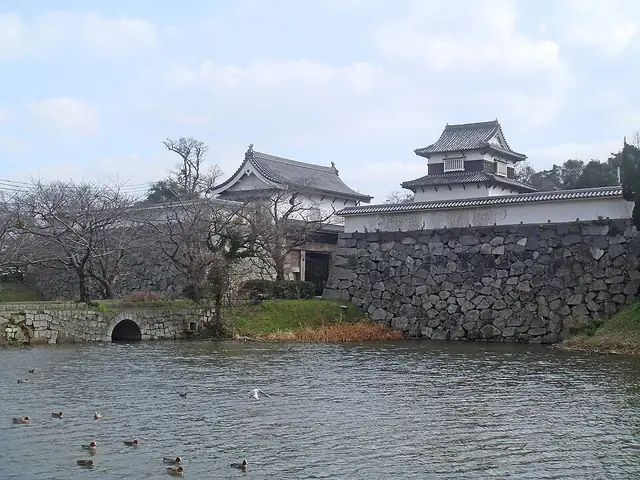
Photo: Mukai, CC BY-SA 3.0, via Wikimedia Commons Fukuoka Castle
2-1-1 Jonai, Chuo Ward, Fukuoka
Also known as Maizuru Castle, this large flatland castle was completed in 1607 by Lord Kuroda Nagamasa and served as the seat of the Fukuoka domain for 270 years. Though largely dismantled in the Meiji era, the remaining turrets and stone walls form the centerpiece of Maizuru Park.
- Built
- 1607
- Architect
- Kuroda Nagamasa
- Style
- Edo period Japanese castle
- Height
- 15 m (49 ft)
- Stories
- 1
- Today
- Historic park & partial ruins
-
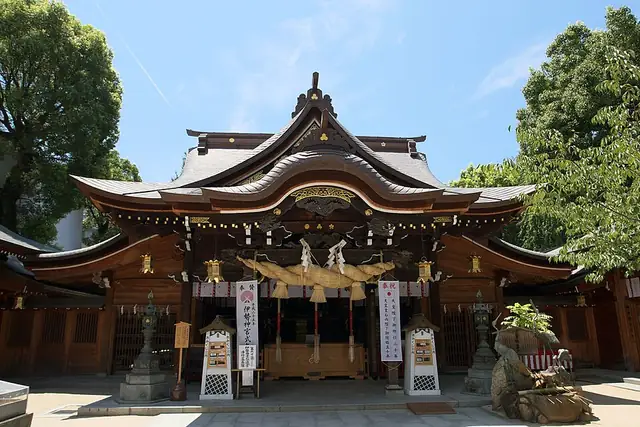
Photo: Pontafon, CC BY-SA 3.0, via Wikimedia Commons Kushida Shrine
2-1 Kamikawabata-machi, Hakata Ward, Fukuoka
The most beloved shrine in Fukuoka, founded in 757 AD and dedicated to two deities of longevity and commerce. It is the center of the Hakata Gion Yamakasa festival, one of Japan's most energetic festivals, in which massive 12-metre festival floats are displayed in the shrine forecourt throughout July.
- Built
- 757
- Style
- Shinto
- Height
- 10 m (33 ft)
- Stories
- 1
- Today
- Active Shinto shrine & cultural landmark
-
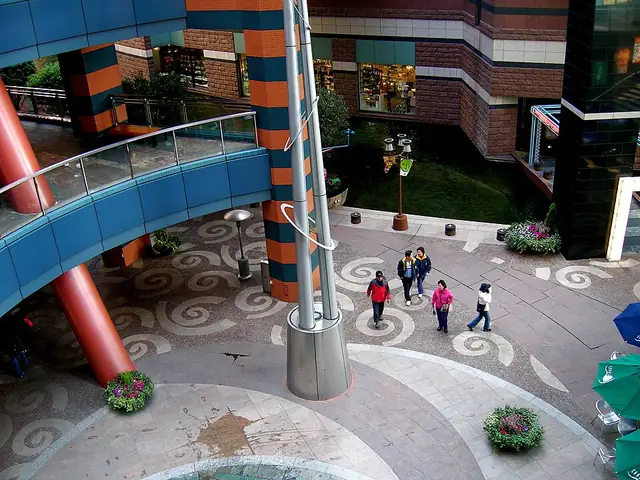
Photo: FlyingToaster Uploaded by FlyingToaster at en.wikipedia, CC BY 3.0, via Wikimedia Commons Canal City Hakata
1-2 Sumiyoshi, Hakata Ward, Fukuoka
A large entertainment complex built in 1996 with a canal running through its center, designed by American architect Jon Jerde as a city within a city. Its postmodern design with curved facades, bold colors, and a performance water fountain has made it Fukuoka's most distinctive piece of contemporary architecture.
- Built
- 1996
- Architect
- Jon Jerde
- Style
- Postmodern
- Stories
- 9
- Today
- Shopping mall & entertainment
-
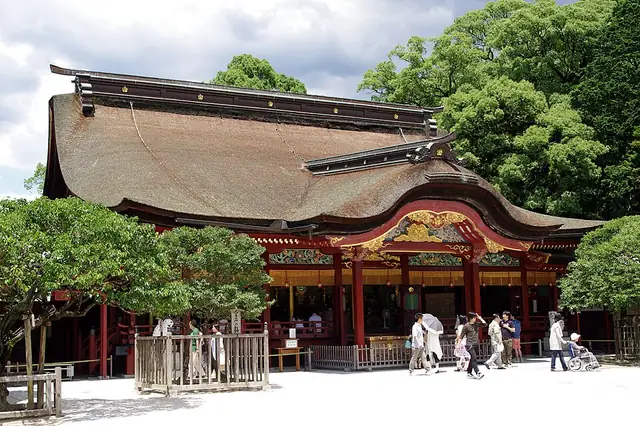
Photo: Jakub Hałun, CC BY-SA 4.0, via Wikimedia Commons Dazaifu Tenman-gū
4-7-1 Saifu, Dazaifu, Fukuoka Prefecture
A revered Shinto shrine established in 919 AD over the grave of Sugawara no Michizane, the deified god of learning and scholarship. It attracts over two million visitors each year, particularly students seeking academic success before examinations.
- Built
- 919
- Style
- Shinto
- Height
- 12 m (39 ft)
- Stories
- 1
- Today
- Active Shinto shrine & pilgrimage site
-
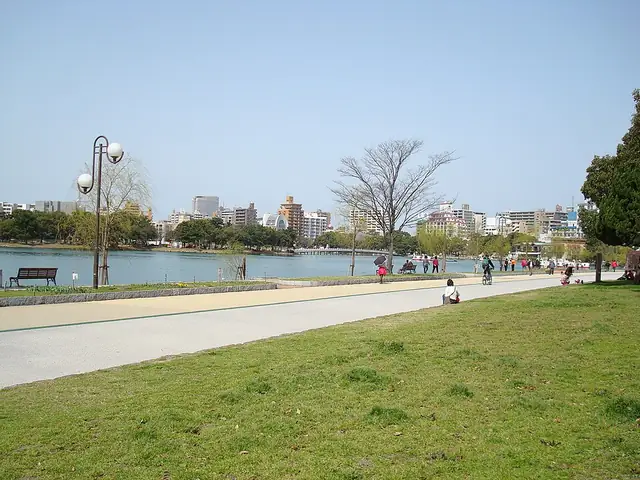
Photo: Tzuhsun Hsu from Taipei, Taiwan, CC BY-SA 2.0, via Wikimedia Commons Ohori Park
1-2 Ohorikoen, Chuo Ward, Fukuoka
A large urban park centered on a lake that was once the outer moat of Fukuoka Castle, redesigned in 1929. The park's central island is connected by three distinctive bridges, and the restored ruins of the castle are visible from the park's northern edge.
- Built
- 1929
- Style
- Japanese garden park
- Stories
- 1
- Today
- Urban park & recreation area


The app's quiz · 10 questions
How well do you know Fukuoka?
The same quiz as in Stamped!: name the landmark, its architect, its style or the year it was finished. Every round is different.
Know Fukuoka well?
Locals know their city best. Suggest a landmark we're missing, a fix to one we have, or share your own photo of one. Every suggestion is checked before it goes into the app.
More cities in Asia

Stamp all 5 in Stamped!
Fly through Fukuoka in photoreal 3D, take its 10-question quiz, plan your days and earn a passport stamp at every landmark. Free on iPhone, iPad, Mac and Apple Vision Pro.
Download on theApp StoreEnjoying the guides? Leave a tip to help keep new cities coming.